
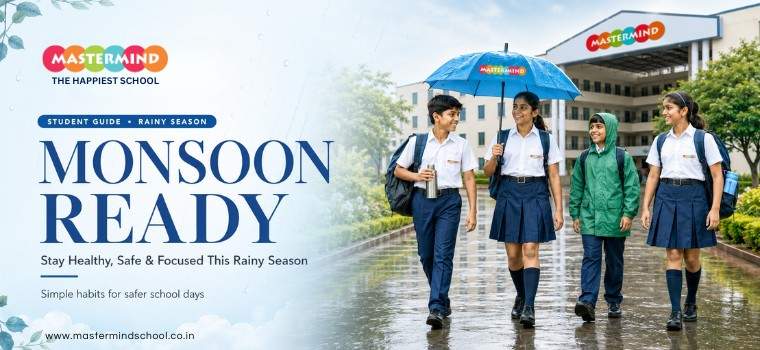
The first heavy rain of the season is honestly one of the best feelings — the smell of wet earth, the sound on the roof, that grey sky that makes everything feel calm. But the same monsoon that makes Indore look beautiful is also the time of year when the most students end up with a cold, a stomach upset, or a fever that steals a whole week of school.
Here's the good news: almost all of it is preventable. Staying healthy and safe in the rainy season isn't about doing something huge — it's about a handful of small habits you can start tomorrow morning. This guide walks you through exactly what to do to stay well, stay safe on the way to school, and keep your brain sharp even when the weather is trying to make you sleepy.
Short version: the monsoon spreads illness mainly through dirty water, mosquitoes, and staying wet. Wash your hands, drink and eat clean, avoid mosquito bites, stay dry, and be careful on wet roads and floors — do those five things and you'll sail through the season.
Why the monsoon needs a little extra care
The rain doesn't make you sick — but the conditions it creates do. India's health authorities point out that illnesses tend to rise during and just after the monsoon for three simple reasons: water collects and gets contaminated, mosquitoes get thousands of new places to breed, and constant dampness lowers the body's guard. The National Center for Vector Borne Diseases Control (under India's Ministry of Health & Family Welfare) flags the monsoon and post-monsoon months as the peak season for diseases like dengue and malaria.
So the illnesses of the season fall into three easy-to-remember buckets:
- Waterborne — from dirty water and food: typhoid, cholera, hepatitis A, and the usual stomach infections.
- Mosquito-borne — from bites: dengue, malaria, and chikungunya.
- The damp-weather bunch — from staying wet and crowded classrooms: cold, cough, viral fever, and the flu.
Once you know the three buckets, staying safe becomes very simple — you just close the door on each one.
Beat the bugs: staying healthy in the rainy season
Wash your hands like it actually matters (because it does)
This is the single most powerful thing on this whole list. The World Health Organization and UNICEF both call handwashing with soap one of the most effective, low-cost ways to stop the spread of infection. Most monsoon stomach bugs travel from hands to mouth — so clean hands break the chain.
Wash for about 20 seconds (hum a short tune), especially before eating, after the washroom, and after coming in from outside. Keep a small hand sanitiser in your bag for the times a tap isn't handy.
Drink safe, eat safe
Dirty water is the number-one monsoon troublemaker, so this one is worth real attention:
- Carry your own water bottle filled with clean, boiled or filtered water from home.
- Say no to cut fruit, chaat and juices sitting in the open near the school gate during monsoon.
- Eat warm, freshly cooked home food as much as you can — usually safer, and cosy in the rain.
- Wash fruits and veggies well at home before eating.
| Safer choice | Skip in the rains |
|---|---|
| Home-cooked warm tiffin | Open, uncovered snacks near the gate |
| Your own sealed water bottle | Loose water from unknown sources |
| Freshly washed, peeled fruit | Pre-cut fruit sitting in the open |
| Boiled or filtered water | Roadside juices and ice |
Stop mosquitoes from making you their next meal
Dengue and malaria are spread by mosquitoes that breed in clean, still water — a bucket, a flowerpot tray, a discarded cup, an old tyre. You can be a mosquito-buster in five minutes:
- Once a week, tip out any standing water around your home and terrace.
- Wear full-sleeve shirts and long trousers, especially at dawn and dusk.
- Use a repellent your family approves of; sleep under a net or with screens if mosquitoes are bad.
Remember: dengue mosquitoes often bite during the daytime — so this isn't only a night-time worry.
Stay dry = stay well
Sitting in wet clothes and wet shoes all day is how a lot of students catch that classic monsoon cold. Beat it with a "rain kit": a sturdy umbrella or raincoat every single day, an extra pair of socks and a small towel in your bag, and a rain cover so your books survive the walk in. Change out of wet clothes as soon as you can, and dry your hair before sitting under a fan.
Stay safe: getting to and around school in the rain
Health is only half the story. Rain also makes roads, floors and journeys riskier — so a little extra care keeps you safe.
On the way to school
- Wear bright colours when it's grey so drivers can see you.
- Cross only at proper crossings; never dash across a waterlogged road — you can't see potholes or open drains.
- If you cycle, slow down; wet brakes take longer to stop.
If you take a school bus, that journey should be the safe part of your day. Mastermind School runs its own GPS- and CCTV-fitted buses with trained drivers and a female staff member on board, so students across East Indore reach school safely even in heavy rain. On your side: stay seated, wait for the bus to fully stop before getting on or off, and keep the aisle clear of wet umbrellas.
Slippery floors and stairs
Most rainy-day tumbles happen indoors, near entrances and on staircases. Wear anti-slip shoes with grip, walk — don't run on wet corridors and stairs, always hold the handrail, and put wet umbrellas in the stand, not on the floor.
Thunder, lightning and heavy rain
- During thunder and lightning, stay indoors — away from windows, open grounds and tall isolated trees.
- Don't play near overflowing drains, flooded fields or fast-moving water.
- If there's heavy waterlogging, follow your teachers' instructions calmly rather than rushing.
Stay sharp: focus and mood when the sky is grey
Ever notice how a rainy afternoon makes you want to just nap? You're not lazy — grey skies mean less sunlight, which can genuinely make us feel sleepier and a bit low. Here's how to stay sharp:
- Keep moving. A little indoor stretching, yoga, or games during breaks wakes up your brain far better than slumping at your desk. At Mastermind School, yoga, sports and happiness-first classrooms exist for exactly this reason — an active, cheerful mind learns better.
- Eat warm, light meals rather than heavy fried snacks that make you drowsy.
- Light up your study space at home in the evening so your brain stays alert.
- Use the cosy weather to finish homework early, read, or pick up a hobby like chess, drawing or a Rubik's cube.
Your 2-minute monsoon-ready morning checklist
Do a quick scan before you leave the house each rainy morning. Try to hit all seven tomorrow!
- Umbrella or raincoat packed
- Clean water bottle filled from home
- Spare socks and a small towel in the bag
- Hand sanitiser in the side pocket
- Books in a waterproof cover
- Grippy, closed school shoes on
- Home-cooked tiffin (skip open street food)
Seven items, two minutes, one healthy and safe day. Do it every morning and it becomes a habit you won't even have to think about.
Key takeaways
- Three sources of monsoon illness: dirty water, mosquitoes, and staying wet — close all three doors.
- Handwashing with soap is your single most powerful protection.
- Carry your own clean water and home food; skip open street snacks in the rains.
- Empty standing water weekly and cover up to keep dengue and malaria mosquitoes away.
- Walk, don't run on wet floors and stairs; never cross waterlogged roads.
- The 2-minute checklist makes every rainy morning easy.
Frequently asked questions
Why do students fall sick more often during the monsoon?
Because the rain creates dirty water, gives mosquitoes new places to breed, and keeps everyone damp — the three conditions most monsoon illnesses need to spread. Good hygiene closes all three doors.
What are the most common monsoon diseases students should know about?
They fall into three groups: waterborne (typhoid, cholera, hepatitis A, stomach infections), mosquito-borne (dengue, malaria, chikungunya), and damp-weather illnesses (cold, cough, viral fever, flu).
What's the single best way for a student to stay healthy in the rainy season?
Wash your hands with soap regularly — especially before eating and after coming inside. Health experts rank it among the most effective ways to stop infections spreading.
What should I keep in my school bag during the monsoon?
An umbrella or raincoat, a clean water bottle, an extra pair of socks and a small towel, hand sanitiser, and a waterproof cover for your books.
Is it safe to eat street food during the rainy season?
It's best to avoid open, cut, or stored-in-the-open food and drinks during the monsoon — they're a common cause of stomach infections. Warm, freshly cooked home food is the safer choice.
How do I protect myself from mosquitoes at home and at school?
Empty any standing water around your home weekly, wear full sleeves and long trousers (especially at dawn and dusk), and use a repellent your family approves. Dengue mosquitoes often bite during the day too.
What should I do if I get wet in the rain on the way to school?
Change into dry clothes as soon as you can, swap wet socks for the spare pair, dry your hair, and avoid sitting directly under a fan while still damp.
How can I avoid slipping on wet school floors and stairs?
Wear grippy, closed shoes, walk instead of running, hold the handrail on staircases, and wipe your feet at entrances. Most rainy-day falls happen near doors and stairs.
What safety rules should I follow on the school bus when it rains?
Wait for the bus to stop fully before boarding or getting off, stay seated, keep the aisle clear of wet umbrellas, and follow the bus staff's instructions.
Why do I feel sleepy or low on rainy days, and how do I stay focused?
Less sunlight can make you feel drowsy and a bit low. Stay active with stretching, yoga or games during breaks, eat light warm meals, and keep your study area well-lit in the evening.
Should I still drink plenty of water during the monsoon?
Yes — you may feel less thirsty in cool weather, but your body still needs water. Just make sure it's clean, boiled or filtered water from a trusted source.
How can I boost my immunity naturally in the rainy season?
Eat home-cooked warm food, get enough sleep, stay active, drink safe water, and keep your hands and surroundings clean. There's no magic shortcut — steady healthy habits do it.
What should students do during heavy rain, thunder or waterlogging near school?
Stay indoors, away from windows, open grounds and tall isolated trees; avoid flooded areas and drains; and calmly follow your teachers' and school's instructions.
Does Mastermind School take extra care during the monsoon?
Mastermind School's safety systems — CCTV monitoring, RFID attendance, GPS- and CCTV-fitted buses with a female staff member on board, first-aid and an on-call doctor — support students through every season, including the monsoon.
When should a student stay home from school during the monsoon?
If you have a fever, vomiting, loose motions, or a bad cough, it's better to rest at home, recover fully and avoid spreading it to friends. When in doubt, check with a parent or doctor.
Enjoy the rain — every single day of it
The monsoon really is one of the best times of the year — and it can stay that way. Falling sick or having an accident isn't a random stroke of bad luck; it's almost always the result of a few missing habits. Wash your hands, drink and eat clean, dodge the mosquitoes, stay dry, and move carefully on wet roads and floors, and you get to enjoy every rainy day without losing a single one to a cold or a stomach bug.
Start small. Pick one habit from this guide and do it tomorrow morning — then add another the next day. By the time the rains are in full swing, being monsoon-ready will feel completely automatic. Stay healthy, stay safe, and enjoy the rain.
Try the 2-minute checklist tomorrow. Pack all seven items in the morning and see how much easier your rainy day feels. Curious how an active, happiness-first day keeps students sharp even on grey mornings? Explore our campus and activities.
Naveen Chowdhari is a visionary educationist dedicated to redefining the academic landscape in Indore. As the Director of Mastermind School and Mastermind Abacus, he is a firm believer that premium, world-class education should be accessible to every aspiring student. Under his leadership, Mastermind School has become a benchmark for excellence—integrating advanced CBSE pedagogy, Robotics, and Smart-Class technology while maintaining a student-first approach to value. His mission is to empower the next generation of Indore with global skills and traditional roots.